Learn Chinese with The Untamed: Words, Names and Study Plan
You can learn Chinese with The Untamed (陈情令, Chén Qíng Lìng) if you're around HSK 5, and it gives you more than most dramas do: a cultivation vocabulary, a clan system and a naming system that classical China actually used. This guide covers the level, the words that keep coming back, the address rules that confuse every new viewer and a plan for all 50 episodes.
Short answer: The Untamed is an upper-intermediate show, about HSK 5 (our estimate). Speech is clear and not fast, but the dialogue is semi-classical and full of clan names, titles and cultivation terms. Learn the 40 words below first. Then the first two confusing episodes become manageable, and the rest of the show starts repeating itself in a useful way.
On this page
What is The Untamed, and what level is it?
The Untamed 陈情令
Wei Wuxian, a cultivator remembered as the founder of a feared dark path, comes back to life sixteen years after his death. He runs into Lan Wangji, a strict young master from a rival clan who knew him when they were students, and the two follow a string of hauntings back into their shared past.
Why it works for learners: Characters speak at a steady, almost stagey pace, and each clan has a clear speaking style, from the formal Lan clan to the loud, joking Yunmeng disciples. The hard part is not speed but density: five clans, three names per character and a fantasy vocabulary. Once those are in place, the show repeats them for 50 episodes, which is exactly what you want from long input.
The show was produced by Tencent Penguin Pictures and NewStyle Media, starring Xiao Zhan as Wei Wuxian and Wang Yibo as Lan Wangji. It aired from June to August 2019, and a 20-episode special edition followed on WeTV that December. It has been distributed abroad on several platforms, including Netflix, Viki and WeTV, so check what is available in your region.
About the source novel. Mo Dao Zu Shi (Grandmaster of Demonic Cultivation) is a danmei novel: a romance between two men, serialized on Jinjiang Literature City in 2015–2016. Chinese broadcast rules don't allow same-sex romance on screen, so the drama removes the romance and presents the two leads as 知己 (zhījǐ, kindred spirits who truly understand each other). The plot was reshaped around that change. If you later read the novel, expect a different emphasis and some mature content.
Is The Untamed good for learning Chinese?
Yes, for intermediate learners who already enjoy the genre. Here is what helps and what gets in the way.
- Good: clear studio-recorded Mandarin with burned-in Chinese subtitles on most releases, as usual for mainland dramas. Cultivation terms repeat in nearly every episode. Many scenes are dialogue between two people, which makes them easy to replay.
- Good: it teaches register. You hear how juniors speak to elders, how disciples address each other, and how a humble "I" (在下) differs from a plain 我.
- Hard: the first two episodes are set in the present and assume you already know who everyone is. Then a long flashback starts. Most viewers feel lost at first, and that is normal.
- Hard: semi-classical function words (何, 此, 莫, 乃) and four-character expressions show up in speeches and rules. You won't hear these in modern dramas.
If HSK 5 sounds far off, start with Love Between Fairy and Devil or another title from our costume drama list, where the dialogue is closer to modern speech.
The Untamed vocabulary: 40 words that keep coming back
These come from the show's core world: cultivation, clans, places and the way people address each other. Proper names are included because you'll hear them hundreds of times, and recognizing them frees your attention for everything else.
Cultivation
| Chinese | Pinyin | Meaning | Note |
|---|---|---|---|
| 修仙 | xiūxiān | to cultivate immortality | The genre's core verb; 修 alone also means "to cultivate" |
| 金丹 | jīndān | golden core | A cultivator's source of power; central to the plot |
| 灵力 | línglì | spiritual power | What the golden core produces |
| 怨气 | yuànqì | resentful energy | Everyday meaning: grudge, resentment |
| 诡道 | guǐdào | the "crooked" (demonic) path | Wei Wuxian's unorthodox school; 诡 = deceitful, uncanny |
| 夜猎 | yèliè | night hunt | Hunting spirits and corpses |
| 走尸 | zǒushī | walking corpse | The show's basic monster |
| 符 | fú | talisman | Paper charms; 符咒 fúzhòu is the fuller word |
| 法器 | fǎqì | magic instrument | Swords, flutes and seals used in cultivation |
| 结界 | jiéjiè | barrier, ward | Also common in Japanese anime as 結界 |
Clans and places
| Chinese | Pinyin | Meaning | Note |
|---|---|---|---|
| 世家 | shìjiā | great family, aristocratic clan | The five clans are the 五大世家 |
| 姑苏蓝氏 | Gūsū Lán shì | the Lan clan of Gusu | Pattern: place + surname + 氏 (clan) |
| 云梦江氏 | Yúnmèng Jiāng shì | the Jiang clan of Yunmeng | Wei Wuxian's adoptive clan |
| 岐山温氏 | Qíshān Wēn shì | the Wen clan of Qishan | The most powerful clan early on |
| 兰陵金氏 | Lánlíng Jīn shì | the Jin clan of Lanling | Gold-robed and status-conscious |
| 清河聂氏 | Qīnghé Niè shì | the Nie clan of Qinghe | Known for sabres (刀 dāo) |
| 云深不知处 | Yún shēn bù zhī chù | the Cloud Recesses | Literally "deep in the clouds, nobody knows where"; borrowed from a Tang poem |
| 莲花坞 | Liánhuā Wù | Lotus Pier | 坞 = a sheltered dock or hollow |
| 乱葬岗 | Luànzàng Gǎng | the Burial Mounds | Literally "hill of scattered graves" |
| 宗主 | zōngzhǔ | clan or sect leader | Used as a title: 江宗主 |
| 家规 | jiāguī | family rules | The Lan clan is famous for carving thousands of them in stone |
| 抹额 | mò'é | forehead ribbon | The Lan clan's white headband |
Names, titles and address
| Chinese | Pinyin | Meaning | Note |
|---|---|---|---|
| 名 / 字 | míng / zì | given name / courtesy name | See the register section below |
| 号 | hào | title, sobriquet | A third name, often ending in 君 |
| 含光君 | Hánguāng-jūn | Lan Wangji's title | 君 jūn = lord, gentleman |
| 夷陵老祖 | Yílíng Lǎozǔ | the Yiling Patriarch | Wei Wuxian's feared epithet; 老祖 = founding ancestor |
| 仙督 | xiāndū | Chief Cultivator | A post that matters late in the show |
| 公子 | gōngzǐ | young master | 蓝二公子 = Second Young Master Lan |
| 兄长 | xiōngzhǎng | elder brother (formal) | How Lan Wangji addresses his brother |
| 叔父 | shūfù | uncle (father's younger brother) | Formal; modern speech uses 叔叔 |
| 师姐 | shījiě | senior fellow disciple (female) | Also 师兄, 师弟, 师妹 |
| 前辈 | qiánbèi | senior, elder | Still used in modern Chinese |
| 在下 | zàixià | I (humble) | Literally "the one below" |
Events, objects and the rest
| Chinese | Pinyin | Meaning | Note |
|---|---|---|---|
| 射日之战 | Shèrì zhī zhàn | the Sunshot Campaign | Literally "the war of shooting the sun"; the Wen clan's emblem is a sun |
| 阴虎符 | yīnhǔfú | the Stygian Tiger Seal | A 虎符 was a real tiger-shaped military tally |
| 陈情 | Chénqíng | Wei Wuxian's flute | Also "to state one's feelings"; it gives the show its title |
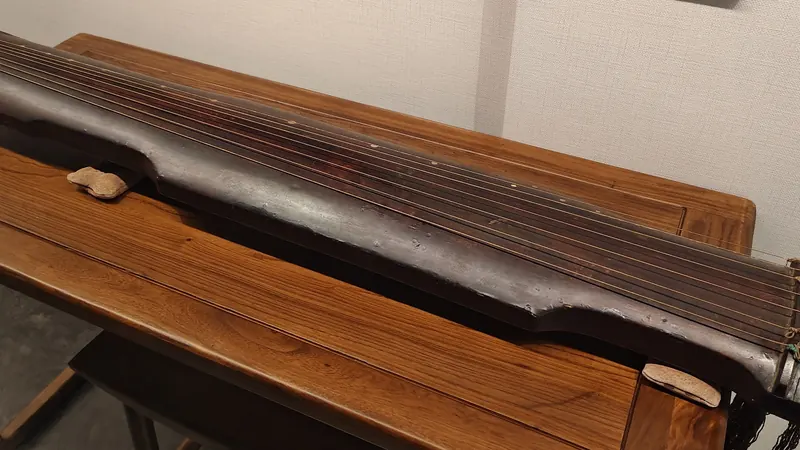
| 琴 | qín | zither (guqin) | The Lan clan's instrument |
| 剑 | jiàn | sword | Swords have names: 避尘 Bìchén is Lan Wangji's |
| 天子笑 | Tiānzǐxiào | Emperor's Smile | The wine Wei Wuxian loves; 天子 = Son of Heaven |
| 知己 | zhījǐ | kindred spirit, true friend | A key word for how the drama frames the leads |
For the wider genre, our planned cultivation vocabulary glossary goes deeper on realms, cores and techniques.
Courtesy names and titles in The Untamed
The biggest source of confusion is that every main character has up to three names, and which one someone uses tells you about their relationship.
- 名 (given name): used by parents, elders and very close people. Wei Wuxian's given name is 魏婴 (Wèi Yīng), Lan Wangji's is 蓝湛 (Lán Zhàn).
- 字 (courtesy name): taken in adulthood and used by peers. 无羡 (Wúxiàn) and 忘机 (Wàngjī) are courtesy names, which is why the polite world calls them Wei Wuxian and Lan Wangji.
- 号 (title): a public honorific. Lan Wangji is 含光君, his brother is 泽芜君 (Zéwú-jūn).
So when Lan Wangji calls Wei Wuxian 魏婴, and Wei Wuxian calls him 蓝湛, they are skipping the polite courtesy names. Between peers that is either very rude or very intimate, and the show uses that tension deliberately. Listen for who switches names, and when.
The disciple terms work the same way as in every cultivation story. 师兄, 师姐, 师弟 and 师妹 rank fellow disciples by seniority, not by age.
Semi-classical speech. Formal characters favor short, literary words: 不必 (no need), 多谢 (many thanks), 告辞 (I take my leave), 何人 (who) and 此 (this). You don't need to produce them, only recognize them. Don't copy them into your own speech, where they would sound like a period drama.
How to watch The Untamed: an arc-by-arc study plan
Fifty episodes of about 45 minutes is roughly 37 to 38 hours of listening, or 55 to 65 hours if you pause, rewatch and review. The arcs below are approximate, since the show cuts between them.
| Stage | Episodes (approx.) | What happens to your Chinese | How to watch |
|---|---|---|---|
| Present-day opening | 1–2 | Hardest stretch: names and backstory with no explanation | Watch with English subtitles once, then again with Chinese only |
| Student days at the Cloud Recesses | Early flashback | Easiest stretch: lessons, rules, everyday banter between teenagers | Chinese subtitles; replay two-person scenes and shadow short lines |
| The Wen clan and the war | Middle of the flashback | Military and political words, oaths, clan meetings | Note each new title in a list; check it after the episode |
| Yiling and the Burial Mounds | Late flashback, up to the mid-30s | Emotional speech, accusations, formal debate | Fewer pauses; aim for the gist |
| Back to the present | Mid-30s to 50 | Mystery vocabulary; everything from earlier repeats | Try whole episodes without pausing |
A workable weekly rhythm is five episodes a week: three on weekdays with Chinese subtitles, plus a weekend session where you rewatch your favorite scene from each episode without subtitles. That finishes the show in ten weeks, at about four to six hours a week.
Common mistake: stopping after episode 2 because "it's too hard." The opening is the worst place to judge your level. Push through to the flashback before deciding.
What to watch or read after The Untamed
- Mo Dao Zu Shi donghua (魔道祖师, Tencent Video, 2018–2021, 35 episodes over three seasons): the same story in animation, with dialogue closer to the novel. Shorter episodes make it a good review.
- Word of Honor (山河令, Youku, 2021, 36 episodes): another danmei adaptation, wuxia rather than xianxia, with harder martial-arts vocabulary.
- Love Between Fairy and Devil (苍兰诀, 2022): an easier xianxia romance. See our guide to learning Chinese with it.
- The novel: our web novel list rates 魔道祖师 at HSK 5–6. For the genre as a whole, see danmei novels and dramas for learners.
Track your Untamed hours
Fifty episodes is a real block of input, and it's easy to lose track of how much you've done. Log each episode in LangTrack as listening time and you can see your total grow toward the hours an HSK 5 learner usually has behind them. For the bigger picture, see how many hours it takes to learn Mandarin.
Frequently asked questions
Is The Untamed good for learning Chinese?
Yes, for upper-intermediate learners. Its Mandarin is clear and steady, and cultivation and clan vocabulary repeats across all 50 episodes. The hard parts are the semi-classical register and the many names and titles, so learn those first.
What HSK level do you need for The Untamed?
About HSK 5, by our estimate. HSK 4 learners can follow it with Chinese subtitles and frequent pauses, especially in the student arc at the Cloud Recesses.
Why do characters in The Untamed have several names?
Each main character has a given name, a courtesy name used by peers and often an honorific title. Which name someone uses shows how formal or close the relationship is.
Is The Untamed based on a novel?
Yes. It adapts Mo Dao Zu Shi (Grandmaster of Demonic Cultivation), a danmei novel by Mo Xiang Tong Xiu. The drama removes the novel's romance and presents the two leads as close friends to fit Chinese broadcast rules.
How many hours is The Untamed?
The 50 episodes run about 45 minutes each, which is roughly 37 to 38 hours of viewing. With rewatching and review, plan for 55 to 65 hours of study.
Track your Untamed hours
Log each episode as listening time and see 50 episodes turn into real hours toward HSK 5.
Start tracking — free