Learn Korean with Reply 1988: Words, Dialect and Study Plan
If you want to learn Korean with Reply 1988, you've picked a show that is almost entirely made of everyday Korean: families eating, neighbors arguing, teenagers teasing each other. The catch is that it's long, set in 1988, and one of its dads never lost his Jeolla accent. This guide gives you the level, 35 words that recur in the show, notes on dialect and family titles, and a 20-episode plan with hours.
Short answer: Reply 1988 (응답하라 1988) is one of the best intermediate dramas for everyday Korean, about TOPIK 3–4. It has 20 episodes of 90–110 minutes, roughly 33 hours. Split each episode into two sittings, watch with Korean subtitles from episode 3, and learn the family and neighborhood words first.
On this page
Is Reply 1988 good for learning Korean?
Yes. Five families share one alley, and the five kids (Deok-sun, Jung-hwan, Sun-woo, Taek and Dong-ryong) have grown up together. Nearly every scene is a home, a school or the street, so the vocabulary is the core of daily Korean: food, chores, money worries, school and family titles. Very few dramas give you that much ordinary conversation in one place.
It is the third show in the Reply series, after Reply 1997 and Reply 1994, and each one stands alone. The finale was the highest-rated drama in Korean cable history at the time, so it's also one of the shows Korean friends are most likely to have seen.
| Reply 1988 | |
|---|---|
| Korean title | 응답하라 1988 (Eungdaphara 1988, also known as Answer Me 1988) |
| Network and year | tvN, November 2015 to January 2016 |
| Episodes | 20 (plus a special), about 90–110 minutes each (roughly 33 hours) |
| Director and writer | Directed by Shin Won-ho, written by Lee Woo-jung |
| Level (estimate) | Intermediate, TOPIK 3–4 |
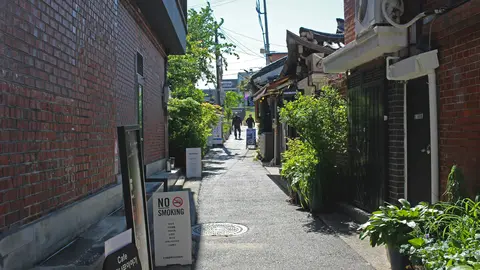
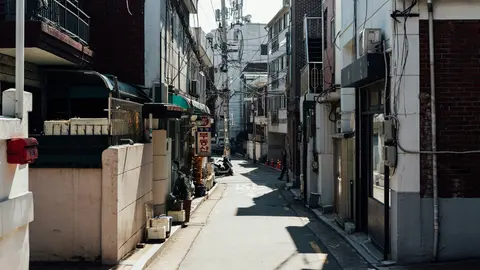
| Setting | An alley in Ssangmun-dong, Dobong-gu, northern Seoul, from 1988 into the 1990s |
| Speech | Casual family and neighborhood Korean; Jeolla dialect from one father, other regional traces from the parents |
| Hardest part | Episode length, overlapping dinner-table talk and some period vocabulary |
For other shows built on daily life, see slice-of-life K-dramas for everyday Korean, which covers Reply 1994.
What makes Reply 1988 hard
- Length. Episodes run 90 minutes or more. Watching one in a single sitting with Korean subtitles is tiring even at TOPIK 4, so plan on two sittings per episode.
- Crowded scenes. Family dinners and the mothers' gossip sessions in the alley often have four or five people talking at once. Don't try to catch every line; follow the person the camera is on.
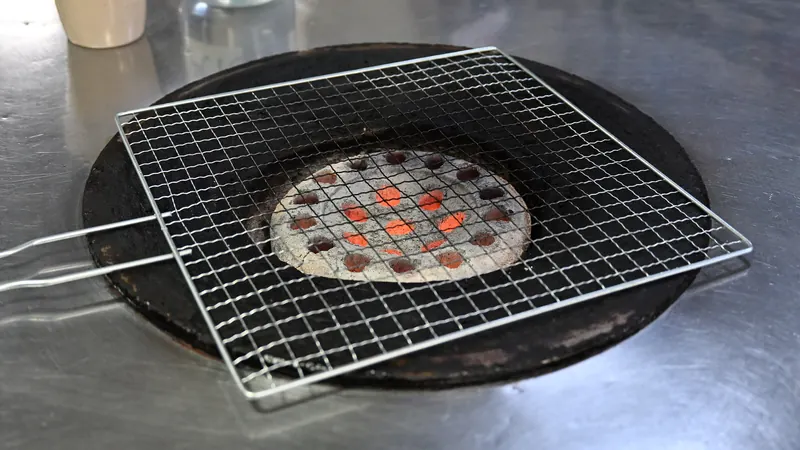
- A 1988 setting. There are no smartphones. Instead you get coal briquettes, landline calls, the old college entrance exam and the Seoul Olympics. A handful of period words come up repeatedly and are listed below.
- Jeolla dialect. Deok-sun's father, Sung Dong-il, comes from Gokseong in South Jeolla, and decades in Seoul haven't changed how he talks. His lines are harder than the kids', especially when he's emotional.
- Episode 1 is a crowd. It introduces five families in a row. Watch it with English subtitles and note who is related to whom; from episode 2 on, the Korean gets easier as the cast sorts itself out.
Jeolla dialect and other accents in Reply 1988
The parents in the alley came to Seoul from different provinces, which was typical of the city in the 1980s. Sung Dong-il's Jeolla speech is the clearest example. Listen for these common Jeolla features, which also show up in many other dramas:
| Korean | Romanization | Meaning | Note |
|---|---|---|---|
| -잉 | -ing | softening tag at the end of a sentence | Very common in Jeolla speech; roughly like adding "you know" |
| -당께 | -dangkke | emphatic ending, "I'm telling you" | Jeolla equivalent of Seoul's -다니까 |
| 거시기 | geosigi | thingy, whatchamacallit | The famous Jeolla filler word |
| 겁나 | geomna | really, very | Started as dialect; now heard all over Korea in casual speech |
Jung-hwan's mother, Ra Mi-ran, is from Gangwon Province and speaks Seoul Korean until she gets excited, when her accent comes out. Taek's father and Sun-woo's mother came from Gimhae in South Gyeongsang. You don't need to learn any of this to follow the show, but noticing it is excellent ear training. Copy the kids, who speak standard Seoul Korean. Our post on K-dramas for Korean dialects covers Jeolla and Gyeongsang speech in more depth.
Reply 1988 vocabulary by theme
Family and neighbors. Titles do most of the work in this show. The adults often refer to each other by their child's name, the way real Korean neighborhoods do.
| Korean | Romanization | Meaning | Note |
|---|---|---|---|
| 엄마 / 아빠 | eomma / appa | mom / dad | Used by the kids at every age |
| 언니 | eonni | older sister (said by a girl) | Deok-sun to Bo-ra |
| 누나 | nuna | older sister (said by a boy) | Also used for older female neighbors |
| 형 | hyeong | older brother (said by a boy) | Jung-hwan to Jung-bong |
| 둘째 | duljjae | second child | Deok-sun is the middle child, and she knows it |
| 막내 | mangnae | youngest child | Also used in K-pop groups today |
| 아줌마 / 아저씨 | ajumma / ajeossi | auntie / uncle (adult neighbors) | Adults are also known by a child's name: 정환이 엄마 (Jung-hwan's mom) |
| 이웃 | iut | neighbor | |
| 골목 | golmok | alley, side street | The whole show happens in one |
Home and food. The mothers send side dishes back and forth across the alley, so food words repeat constantly.
| Korean | Romanization | Meaning | Note |
|---|---|---|---|
| 반찬 | banchan | side dishes | The currency of neighborly favors |
| 밥 | bap | rice; a meal | 밥 먹었어? is a greeting as much as a question |
| 라면 | ramyeon | instant noodles | The kids' default snack |
| 통닭 | tongdak | whole fried chicken | Older word for fried chicken; today it's usually 치킨 |
| 연탄 | yeontan | coal briquette | Heated most Seoul homes in the 1980s |
| 반지하 | banjiha | semi-basement flat | Deok-sun's family rents one |
School, exams and the era. The kids are high school students, and one older brother keeps retaking the entrance exam.
| Korean | Romanization | Meaning | Note |
|---|---|---|---|
| 고등학생 | godeunghaksaeng | high school student | Shortened to 고딩 in slang |
| 학력고사 | hangnyeokgosa | college entrance exam (until 1993) | Replaced by today's 수능 from 1994 |
| 재수 | jaesu | retaking the entrance exam | 재수생 = a student doing a retake year |
| 수험생 | suheomsaeng | student preparing for an exam | |
| 데모 | demo | street protest, demonstration | Bo-ra is a university activist |
| 올림픽 | ollimpik | the Olympics | Seoul hosted them in 1988 |
| 바둑 | baduk | go (the board game) | Taek is a professional go player |
| 대국 | daeguk | a match (in go) | Formal word used for his tournament games |
| 기사 | gisa | professional player (of go) | Same sound as 기사 "article" and "driver"; context tells you which |
Friends and feelings. The romance plot is slow and mostly unspoken, which is why these words carry so much weight.
| Korean | Romanization | Meaning | Note |
|---|---|---|---|
| 친구 | chingu | friend | Strictly, someone born the same year |
| 첫사랑 | cheotsarang | first love | |
| 짝사랑 | jjaksarang | one-sided love | |
| 고백 | gobaek | confession (of feelings) | Also used for confessing a secret |
| 생일 | saengil | birthday | |
| 동네 | dongne | neighborhood | Used with pride: 우리 동네 |
| 쌍문동 | Ssangmun-dong | the neighborhood in the show | A real area in northern Seoul |
Grammar and speech-level notes
Reply 1988 is a masterclass in banmal. The five friends speak casually to each other, the kids speak casually to their own parents, and they switch to polite -요 speech with other kids' parents. Parents talk to everyone's children in banmal. If you track who says -요 to whom, you'll understand Korean politeness better than most textbook chapters can teach it.
Two patterns are worth catching. First, the sentence-ending -잖아 ("you know that…") is everywhere in arguments between siblings. Second, the kids address older neighbors with family words (아줌마, 아저씨, 형, 누나), not names, which is still how Koreans talk today. For the full system, see Korean speech levels in K-dramas.
How to learn Korean with Reply 1988: a 20-episode plan
A full viewing takes about 33 hours. With half-episode sittings and some review, budget 45–50 hours, or about three months at four hours a week.
| Episodes | Subtitles | Focus | Time |
|---|---|---|---|
| 1–2 | English | Learn the five families and who is related to whom | About 3.5 h |
| 3–6 | Korean | Family titles and food words; split each episode into two sittings | About 7 h + 2 h review |
| 7–12 | Korean | School and exam vocabulary; track who uses 존댓말 with whom | About 10 h + 3 h review |
| 13–17 | Korean | Dialect listening: rewatch one of Sung Dong-il's scenes per episode with no subtitles | About 8 h + 2 h review |
| 18–20 | Korean, then none | Finish the story, then rewatch your favorite dinner scene without subtitles | About 5 h + 2 h rewatch |
Tip: the show's best learning scenes are the short ones in the room where the five friends hang out. They are slower than the dinner scenes and full of casual speech worth shadowing.
What to watch after Reply 1988
- Reply 1994 (응답하라 1994, tvN, 2013, 21 episodes). The same writer and director, with university students in a Seoul boarding house and lots of regional dialect. Upper intermediate, TOPIK 4.
- Hospital Playlist (슬기로운 의사생활, tvN, 2020–2021). Same director and writer again, with five friends who are now doctors. See our Hospital Playlist guide.
- Twenty-Five Twenty-One (스물다섯 스물하나, tvN, 2022). Another period coming-of-age drama, set in 1998, and a little easier. See learning Korean with Twenty-Five Twenty-One.
Track your Korean watching hours
Thirty-three hours is a big chunk of listening, and it's easy to lose track of how far you've come by episode 15. Log each episode in LangTrack and you can see how many hours one show added up to, how your Korean-subtitle hours compare with English-subtitle ones, and how far you are from your next level. For the bigger picture, see how many hours it takes to learn Korean.
Frequently asked questions
Is Reply 1988 good for learning Korean?
Yes. It is almost entirely everyday family, school and neighborhood Korean, which makes it one of the best dramas for intermediate learners around TOPIK 3–4. Its main drawback is length: 20 episodes of 90 minutes or more.
What dialect does the dad speak in Reply 1988?
Deok-sun's father, Sung Dong-il, speaks Jeolla dialect. His character comes from Gokseong in South Jeolla Province and kept his accent after decades in Seoul. The kids speak standard Seoul Korean.
How long is Reply 1988?
It has 20 episodes plus a special, each about 90 to 110 minutes, roughly 33 hours in total. With review and rewatching, a study plan takes about 45 to 50 hours.
Do I need to watch Reply 1994 before Reply 1988?
No. Each Reply drama has its own story and characters, so you can start with Reply 1988. Several actors appear in more than one season in different roles.
Where is Reply 1988 set?
In an alley in Ssangmun-dong, a neighborhood in Dobong-gu in northern Seoul, starting in 1988, the year Seoul hosted the Olympics.
Track your Korean drama hours
Log every episode of a long drama and watch the hours add up toward your next level.
Start tracking — free