Official Languages of International Organizations: UN, EU, NATO, AU and More
Every international organization has to decide what languages it works in. The answers are surprisingly consistent: English almost everywhere, French nearly as often, and then a few regional languages depending on who the members are. Below are thirteen major organizations, checked against their founding texts or official sites.
On this page
The list
| Organization | Languages |
|---|---|
| United Nations | Arabic, Chinese, English, French, Russian, Spanish |
| European Union | 24 languages, including English, French and German |
| NATO | English, French |
| African Union | Arabic, English, French, Portuguese, Spanish, Kiswahili |
| Olympics (IOC) | French, English |
| FIFA | Arabic, English, French, German, Portuguese, Russian, Spanish |
| Council of Europe | English, French |
| OSCE | English, French, German, Italian, Russian, Spanish |
| OAS | English, French, Portuguese, Spanish |
| WTO | English, French, Spanish |
| Int’l Court of Justice | French, English |
| OIC | Arabic, English, French |
| ASEAN | English (working language) |
English appears in all thirteen. French appears in twelve; the exception is ASEAN.
The details, organization by organization
United Nations
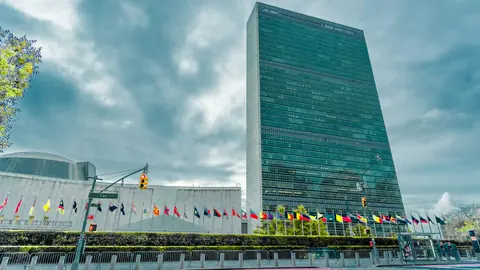
Six official languages: Arabic, Chinese, English, French, Russian and Spanish. The Secretariat's working languages are English and French. Our UN language history explains how the six were chosen and when each became a working language, and the six UN languages guide covers where each is spoken.
European Union
Twenty-four official languages, all with equal legal status. See the full list of EU languages with the year each was added.
NATO
English and French. Article 14 of the North Atlantic Treaty makes the English and French texts equally authentic, and NATO publishes and interprets in both.
African Union
The AU's languages, per its own site and the Protocol on Amendments to the Constitutive Act, are Arabic, English, French, Portuguese, Spanish, Kiswahili “and any other African language”. Spanish is there for Equatorial Guinea and Portuguese for Angola, Mozambique and other Lusophone members. In practice, much of the day-to-day work runs in English and French.
The Olympics (IOC)
The Olympic Charter (Rule 23) makes French and English the IOC's official languages and says that if the French and English texts of an IOC document differ, the French text prevails unless stated otherwise. That's why announcements at Olympic ceremonies are made in French as well as English. The Charter also requires simultaneous interpretation at IOC Sessions into German, Spanish, Russian and Arabic.
FIFA
The 2024 FIFA Statutes list seven official languages: Arabic, English, French, German, Portuguese, Russian and Spanish. Official documents are published in English, French and Spanish, and the others where needed. Unlike the IOC, FIFA makes the English text authoritative when versions differ.
Council of Europe and OSCE
The Council of Europe, the 46-member body behind the European Court of Human Rights, has two official languages under Article 12 of its Statute: English and French. The OSCE has six: English, French, German, Italian, Russian and Spanish.
OAS and WTO
The Organization of American States uses English, French, Portuguese and Spanish, covering every major language of its members. The World Trade Organization's official working languages are English, French and Spanish.
International Court of Justice
Article 39 of the ICJ Statute: “The official languages of the Court shall be French and English.” A party can ask the Court for permission to use another language.
OIC and ASEAN
The Organisation of Islamic Cooperation uses Arabic, English and French. ASEAN is the clearest single-language case: Article 34 of the ASEAN Charter says “The working language of ASEAN shall be English”. None of its members has French as an official language, which makes it the one body on this list without it.
What this tells a language learner
- English is the baseline. Every organization here uses it.
- French is the strongest second language for international careers. It is official in twelve of thirteen, and a working language of the UN Secretariat, NATO, the Council of Europe and the ICJ.
- Spanish and Arabic are regional multipliers. Spanish for the Americas and global trade bodies; Arabic for the Middle East, North Africa and the OIC.
- Portuguese punches above its UN status. It isn't a UN language but it is official at the AU, OAS, FIFA and the EU.
For English speakers, French and Spanish are also the cheapest of these to learn: the U.S. Foreign Service Institute puts both at about 690 class hours, against about 2,200 for Arabic. If you're choosing between the big ones, start with which UN language to learn.
FAQ
What are the official languages of NATO?
English and French. The North Atlantic Treaty itself says its English and French texts are equally authentic (Article 14).
What are the official languages of the African Union?
Arabic, English, French, Portuguese, Spanish and Kiswahili, plus “any other African language”, under the AU’s amended Constitutive Act.
Why is French used at the Olympics?
The Olympic Charter makes French and English the IOC’s official languages, and says the French text prevails if the two differ. The modern Games were revived by a Frenchman, Pierre de Coubertin, and French was the language of diplomacy at the time.
Learning French, Spanish or Arabic for work?
Log every session in a couple of taps and watch your hours climb toward B2. Free for one language.
Start tracking — free