Best Slice-of-Life Manga for Learning Japanese, by Level
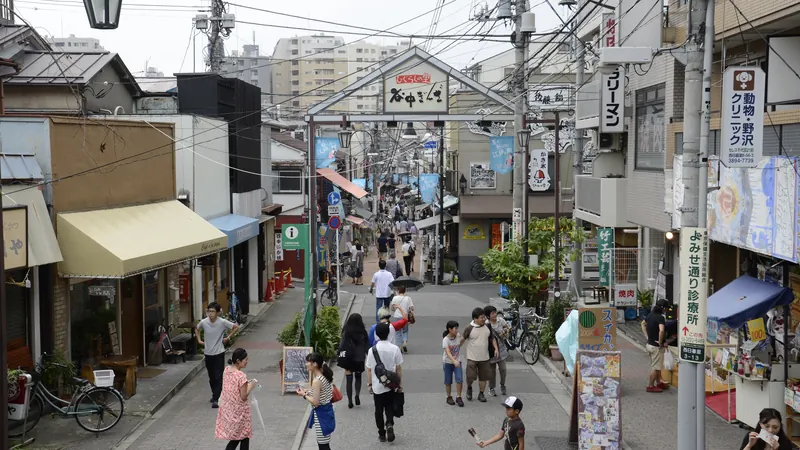
The best slice-of-life manga for learning Japanese are quiet, everyday stories: cafés, meals, walks and small conversations, drawn so clearly that the pictures explain the words. Slice-of-life manga (日常系, nichijōkei, and the calmer "healing" 癒し系, iyashikei) are ideal reading practice because nothing depends on a plot twist you missed. If a sentence beats you, the next page still makes sense.
This list ranks eleven series from easiest to hardest using Natively's community difficulty grades, which map roughly to the JLPT (L13–19 is about N4, L20–26 about N3, L27–33 about N2), plus our notes on furigana and vocabulary. Levels are estimates. We've skipped the picks already in our beginner manga list, including Yotsuba&!, which has its own guide in Learn Japanese with Yotsuba.
Quick picks: At N4, Chiikawa (Natively L16). At N3, Shirokuma Cafe (full furigana) and ARIA. For adult life at N3, Hirayasumi (L23). At N2, What Did You Eat Yesterday? and The Solitary Gourmet (L32).
On this page
Best slice-of-life manga for learning Japanese at a glance
Natively levels come from learners comparing pairs of books they've read and feeding the results into an Elo-style rating. Furigana notes come from Natively's community tags where available; check a sample before you buy, because editions differ.
| Manga | Volumes | Natively | Furigana | Our estimate |
|---|---|---|---|---|
| Chiikawa | 8+ (ongoing) | L16 | None (few kanji) | N4 |
| Shirokuma Cafe | 5 | L21 | Full | N3 |
| Girls' Last Tour | 6 | L21 | None | N3 |
| ARIA | 12 | L21 | Full | N3 |
| Yokohama Kaidashi Kikō | 14 | L22–23 | Not tagged | N3 |
| Hirayasumi | 10+ | L23 | None | N3 |
| Azumanga Daioh | 4 | L24–25 | Not tagged | N3 |
| Skip and Loafer | 13+ (ongoing) | L25 | Not tagged | N3 to N2 |
| What Did You Eat Yesterday? | 24+ | L27 | None | N2 |
| Saint Young Men | 22+ (ongoing) | L30 | Not tagged | N2 |
| The Solitary Gourmet | 2 | L32 | Not tagged | N2 |
Levels were checked in October 2026 and can shift as more readers grade them.
Easiest slice-of-life manga (N4 to N3)
Chiikawa ちいかわ なんか小さくてかわいいやつ
Chiikawa and friends are tiny, round creatures who work odd jobs, take exams, eat snacks and occasionally run from monsters. Each strip is a single small scene.
Why it works for learners: It's the easiest pick here (Natively L16). Strips are a few panels long, the characters speak in short exclamations and simple casual sentences, and there are few kanji, which is why the lack of furigana barely matters. The jokes are visual, so you'll understand even before you understand. It's also everywhere in Japan right now, so it doubles as cultural literacy.
Shirokuma Cafe しろくまカフェ
A polar bear runs a café, and his regulars include a lazy panda with a part-time job at the zoo and a penguin who is the café's most devoted regular. Humans and animals mix as if this were perfectly normal.
Why it works for learners: Full furigana and short, chatty chapters make it a comfortable first "real" manga. The conversations are ordinary café and workplace talk. The hard part is the owner's endless puns (ダジャレ, dajare), which you'll often only get with a dictionary; treat them as bonus puzzles. If you'd rather watch it, see Learn Japanese with Shirokuma Cafe.
Girls' Last Tour 少女終末旅行
Chito and Yuuri, two girls in a ruined, empty city, ride a small tracked motorcycle through the snow looking for food and fuel. Most chapters are one day, one place and one small discovery.
Why it works for learners: Two characters, very few words per page and lots of silent panels. Chito is the careful reader and Yuuri the cheerful one, so their short exchanges are easy to follow. There's no furigana, but the vocabulary is concrete (food, fire, stairs, books). It won the Seiun Award for Best Comic in 2019.
ARIA ARIA
On a terraformed Mars, a canal city modeled on Venice runs on gondolas. Akari comes from Earth to train as a gondolier and tour guide, and spends her days rowing, practicing and noticing small beautiful things.
Why it works for learners: Full furigana and gentle, polite dialogue make it very readable. Akari's trainee job means lots of guide and customer-service Japanese, while her friends tease her for her sentimental lines, a running joke you'll start to recognize. The tone is so calm that rereading feels like a reward, not a chore.
Yokohama Kaidashi Kikō ヨコハマ買い出し紀行
Long after rising seas have reshaped Japan, an android named Alpha runs a small coffee shop on the Miura Peninsula while waiting for her owner to return. She makes coffee, rides her scooter and watches the world slowly change.
Why it works for learners: Whole pages pass with almost no text, and the dialogue that exists is about coffee, weather, the sea and neighbors. It's the purest iyashikei on the list, and its 2007 Seiun Award shows how well it has lasted. Older editions can be hard to find, so check e-book stores.
Adult life and school life (N3)
Hirayasumi ひらやすみ
Hiroto, 29, is a former actor working at a fishing pond. When an elderly friend dies and leaves him her old house in Tokyo, he moves in, then takes in his 18-year-old cousin who's studying for art school.
Why it works for learners: Most slice-of-life manga are set in high school; this one is about adults: rent, part-time work, cooking, neighbors and family. The speech is relaxed adult casual Japanese, which is exactly what you want to hear. There's no furigana, so it suits learners who already read everyday kanji. It won the 2026 Shogakukan Manga Award, and an NHK drama aired in 2025 if you want to pair reading with listening.
Azumanga Daioh あずまんが大王
A ten-year-old prodigy skips straight into high school and joins a class of very different girls: a spacey transfer student, a loud troublemaker, a shy athlete and more. The series follows them through three years to graduation.
Why it works for learners: It's by the creator of Yotsuba&!, so it's the natural next step. The four-panel (4コマ, yonkoma) format gives you a complete joke every four panels, and the school year (exams, sports day, festivals, summer trips) supplies a whole calendar of school vocabulary. Some jokes are wordplay, which is why it rates a little higher than it looks.
Skip and Loafer スキップとローファー
Mitsumi grew up in a tiny rural town in Ishikawa Prefecture and moves to Tokyo for a top high school, with a detailed plan for her life. On day one she gets lost in the rush hour crowds, and a classmate named Shima helps her get to school.
Why it works for learners: It's a school story about social life rather than romance: making friends, misunderstandings, class committees and the gap between countryside and city. The large cast speaks in many registers, and the inner thoughts are written out, which helps. It won the Kodansha Manga Award in 2023, and the 2023 anime makes a good listening companion.
Food, faith and fine detail (N2)
What Did You Eat Yesterday? きのう何食べた?
Shiro, a reserved lawyer, and Kenji, a cheerful hairdresser, are a middle-aged couple in Tokyo. Almost every chapter ends with Shiro cooking dinner for the two of them.
Why it works for learners: The cooking scenes are full recipes, step by step, in dense text: measurements, seasonings and techniques you can actually follow in your own kitchen. The rest is adult conversation about work, aging, family and relationships. With no furigana and long speech bubbles, it's a true N2 read. It won the Kodansha Manga Award in 2019, and the live-action drama is a good listening pair.
Saint Young Men 聖☆おにいさん
Jesus and Buddha decide to take a vacation on Earth and share a cheap apartment in Tachikawa, a Tokyo suburb. They go to the bathhouse, shop for bargains and try very hard not to be recognized.
Why it works for learners: The setting is modern suburban life, but the jokes rely on Buddhist and Christian terms and on puns between them. That makes it a great N2 challenge and a fun cultural primer. It won the Tezuka Osamu Cultural Prize short work award in 2009.
The Solitary Gourmet 孤独のグルメ
Gorō is a salesman who travels around for work and eats alone wherever he happens to be. Each chapter is one meal, one restaurant and his running commentary in his head.
Why it works for learners: It's almost entirely inner monologue: menu names, regional dishes and Gorō's very particular opinions about ordering. The adult vocabulary and food names are why learners rate it L32. There are only two volumes, and the long-running TV Tokyo drama (2012–) is ideal for listening practice afterward.
Words that fill every slice-of-life manga
These words appear constantly in quiet everyday stories. Several are sound-symbolic words, which manga use far more than textbooks do; our manga sound effects glossary has many more.
| Japanese | Romaji (kana) | Meaning | Note |
|---|---|---|---|
| 日常 | nichijō (にちじょう) | everyday life | 日常系: the slice-of-life genre |
| 癒し | iyashi (いやし) | healing, comfort | 癒し系: soothing, "healing" stories |
| のんびり | nonbiri | leisurely, relaxed | The mood of the whole genre |
| ほっこり | hokkori | warm, heartwarming | Common in reviews too |
| ゴロゴロ | gorogoro | lazing around | Also thunder or rolling |
| ぼーっと | bōtto | spacing out | ぼーっとする |
| 近所 | kinjo (きんじょ) | neighborhood | ご近所さん: neighbors |
| 常連 | jōren (じょうれん) | regular customer | Every café manga has them |
| 店長 | tenchō (てんちょう) | shop manager | Used as a form of address |
| 散歩 | sanpo (さんぽ) | a walk | |
| 晩ご飯 | bangohan (ばんごはん) | dinner | Also 夕飯 (yūhan) |
| お疲れ様 | otsukaresama (おつかれさま) | thanks for your hard work | Greeting at the end of work |
| ため息 | tameiki (ためいき) | a sigh | ため息をつく: to sigh |
| ダジャレ | dajare | pun, dad joke | Shirokuma's specialty |
How to read slice-of-life manga in Japanese
- Read a chapter twice. First for the pictures and the gist, then again with a dictionary for five to ten words. Slice-of-life chapters are short enough that this takes one sitting.
- Prefer digital at first. E-book editions let you look up kanji you can't read, which matters for the series without furigana.
- Expect slow early volumes. As a rough guide, many N3 readers take two to four hours over their first volume of a new series and noticeably less by the third, as names and vocabulary repeat.
- Pair with the adaptation. Several picks have anime or dramas. Reading first, then watching, turns the same story into listening practice. Our slice-of-life anime list has more.
For a full method, from choosing a first volume to handling handwritten asides, see how to learn Japanese from manga.
Track your manga reading hours
Reading time is easy to underestimate because manga feel light. Log each session in LangTrack and you'll see how many hours each series took, how your reading speed improves from volume one to volume three, and how your reading balances against listening.
Frequently asked questions
What is the easiest slice-of-life manga for learning Japanese?
Chiikawa is one of the easiest, at Natively level 16, around N4. Its strips are short, the dialogue is simple and there are few kanji. Shirokuma Cafe is a good next step, with full furigana.
Is Hirayasumi good for learning Japanese?
Yes, at about N3. Natively rates it level 23. It follows adults rather than high school students, so it teaches everyday adult casual Japanese, but it has no furigana.
Which slice-of-life manga have furigana?
Shirokuma Cafe and ARIA are tagged on Natively as having full furigana. Chiikawa, Girls' Last Tour, Hirayasumi and What Did You Eat Yesterday? are tagged as having none.
Is What Did You Eat Yesterday? hard to read in Japanese?
It is around N2. Natively rates it level 27. The cooking scenes are full recipes written in dense text, and there is no furigana, but the vocabulary is practical and repeats.
What does iyashikei mean?
Iyashikei (癒し系) means healing or soothing. It describes calm stories with little conflict, such as ARIA and Yokohama Kaidashi Kikō, that are meant to relax the reader.
Track your manga reading
Log every reading session and watch quiet chapters turn into real hours toward your next level.
Start tracking — free