Learn Japanese with Shirokuma Cafe: Level, Puns, Words
Can you learn Japanese with Shirokuma Cafe? Yes. Polar Bear Cafe is one of the easiest full-length anime you can watch: slow, calm, set in a café and a zoo, and rated 28/100 on jpdb.io. The one hard thing is the puns. This guide gives you the level, the words that recur, how Japanese puns work and a 50-episode plan.
It's written for beginners around JLPT N5 to N4 who want their first long series in Japanese.
Short answer: Shirokuma Cafe (しろくまカフェ) is one of the best anime for JLPT N5 to N4 learners. jpdb.io rates it 28/100, among the easiest 20% of anime on its list, and some episodes run below 90 words per minute. It has 50 episodes, about 20 hours. Expect to miss most puns at first; that's normal.
On this page
Is Shirokuma Cafe good for learning Japanese?
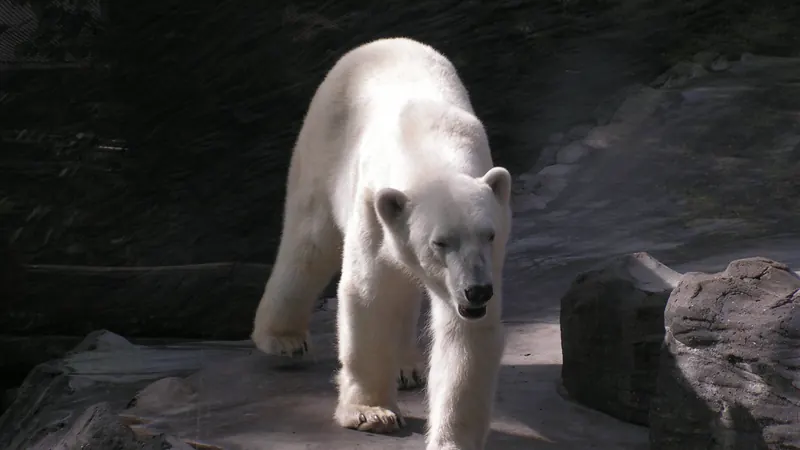
Yes, for beginners. A polar bear runs a café where animals and humans are regulars. Panda would rather sleep than work, but his mother wants him to get a job, so he ends up as a part-time panda at the zoo. Penguin is one of the regulars. Grizzly runs a bar. Nothing much happens, and that's the point: orders, part-time work, small misunderstandings and a lot of coffee.
The pace is famously slow. Characters speak calmly, there are long pauses, and every scene happens in one of a few places (the café, the zoo, the bar). You hear the same food, work and café words over and over.
| Shirokuma Cafe | |
|---|---|
| Japanese title | しろくまカフェ (Shirokuma Kafe, "Polar Bear Café") |
| Original | Manga by Aloha Higa in Flowers (Shogakukan), 2006–2013, 5 volumes; sequel Shirokuma Cafe Today's Special in Cocohana (Shueisha) from 2014 |
| Anime | Studio Pierrot, directed by Mitsuyuki Masuhara; TV Tokyo, April 2012 to March 2013; 50 episodes |
| Voices | Takahiro Sakurai (Polar Bear), Jun Fukuyama (Panda), Hiroshi Kamiya (Penguin), Yūichi Nakamura (Grizzly) |
| Where to watch | Crunchyroll in the US with Japanese audio (check your region) |
| Level (estimate) | JLPT N5 to N4 |
| jpdb.io difficulty | 28/100 average, 42/100 peak; 6,579 unique words over 50 episodes |
| Speech speed | About 84–127 words per minute per episode |
| Hardest part | Puns, and the large cast of zoo animals |
For scale: jpdb.io's easiest anime, Teasing Master Takagi-san, scores 4/100, Spy×Family scores 41 and Frieren 51. Shirokuma Cafe sits between positions 200 and 250 of about 1,400 shows. It's already a pick in our list of anime for beginner Japanese learners; this guide is the deep dive.
What makes Shirokuma Cafe hard: the puns
Polar Bear loves terrible puns, called ダジャレ (dajare). A dajare plays on two words that sound the same or almost the same. The classic example, not from the show, is 布団が吹っ飛んだ (futon ga futtonda, "the futon blew away"): ふとん and ふっとん sound alike. Japanese has a lot of homophones, so these jokes are everywhere, and they're groan-worthy "dad jokes" in Japan too.
Puns are hard because subtitles can't translate them, and you need to know both words to get the joke. Here's how to handle them:
- Notice the reaction. When another character goes silent, groans or makes a blunt comeback (a ツッコミ, tsukkomi), a pun just happened.
- Rewind once. Listen for the repeated sound. Write both words down if you can.
- Don't stop for long. If you can't find the second word in a minute, move on. Missing a pun doesn't hurt the story.
- Treat each pun as two words. Every pun you work out teaches you a pair of similar-sounding words, which is excellent listening practice.
Two other quirks: Panda's laziness means a lot of whiny, drawn-out casual speech, and the zoo has many animal characters whose names are just their species in katakana, like グリズリー (Grizzly) and ペンギン (Penguin).
Shirokuma Cafe Japanese vocabulary: 30 words that recur
Frequencies are from jpdb.io's word list for the 50 episodes. All of these appear dozens of times or more.
Café and ordering
| Japanese | Romanization | Meaning | Note |
|---|---|---|---|
| カフェ | kafe | café | Also in the title |
| コーヒー | kōhī | coffee | About 70 times |
| カフェモカ | kafe moka | caffè mocha | A menu item that comes up again and again |
| 豆 (まめ) | mame | beans | Coffee beans, and beans in general |
| 頼む (たのむ) | tanomu | to order, to ask for | The everyday verb for ordering |
| おかわり | okawari | a refill, seconds | About 60 times |
| サービス | sābisu | on the house | In Japan, サービス often means something free |
| お客さん (おきゃくさん) | okyakusan | customer | Staff say the more polite お客様 to customers' faces |
| いらっしゃる | irassharu | to come (honorific) | Behind いらっしゃいませ, "welcome" |
| どうぞ | dōzo | here you are, please go ahead | When serving |
| 美味しい (おいしい) | oishii | delicious | About 125 times |
| 飲む (のむ) | nomu | to drink | Coffee at the café, alcohol at Grizzly's bar |
The zoo and part-time work
| Japanese | Romanization | Meaning | Note |
|---|---|---|---|
| 動物園 (どうぶつえん) | dōbutsuen | zoo | Panda's workplace |
| バイト | baito | part-time job | Short for アルバイト |
| 常勤 (じょうきん) | jōkin | full-time (staff) | The zoo has a full-time panda; Panda is the part-timer |
| 仕事 (しごと) | shigoto | work, job | Panda tries to avoid it |
| 頑張る (がんばる) | ganbaru | to do your best | About 90 times |
| やめる | yameru | to quit, stop | Panda's other favorite idea |
| 寝る (ねる) | neru | to sleep | Panda's main hobby; over 100 times |
| お母さん (おかあさん) | okāsan | mother | Panda's mother, who wants him working |
Animals and food
| Japanese | Romanization | Meaning | Note |
|---|---|---|---|
| 白熊 (しろくま) | shirokuma | polar bear | Usually written in kana in the title; literally "white bear" |
| 笹 (ささ) | sasa | bamboo grass | What pandas eat; about 95 times |
| 竹 (たけ) | take | bamboo | The plant pandas are famous for |
| 食べる (たべる) | taberu | to eat | One of the most frequent verbs in the show |
Reactions you'll hear every episode
| Japanese | Romanization | Meaning | Note |
|---|---|---|---|
| 可愛い (かわいい) | kawaii | cute | Nearly 200 times; Panda's cuteness is a running topic |
| すごい | sugoi | amazing | Over 120 times |
| 楽しい (たのしい) | tanoshii | fun | About 65 times |
| 一緒に (いっしょに) | issho ni | together | Invitations: 一緒に〜しよう |
| 駄目 (だめ) | dame | no good, not allowed | Usually written in kana |
| すみません | sumimasen | excuse me, sorry | About 70 times; the café's most useful phrase |
Speech styles in Shirokuma Cafe
- Polar Bear speaks gentle, polite Japanese as a café owner. His customer-service phrases (welcoming customers, taking orders, serving) are the ones you'll hear in any Japanese café. Shadow them.
- Panda is casual, lazy and a bit childish, with lots of drawn-out vowels and complaints. Natural, but not a model for adults.
- Penguin and Grizzly speak ordinary casual male Japanese with their friends, a useful middle ground between Polar Bear's politeness and Panda's whining.
- Café staff and zoo staff use the polite です/ます forms that most textbooks teach, so it's a good bridge from textbook to real speech.
How to learn Japanese with Shirokuma Cafe: a 50-episode plan
With 72,000 words of dialogue over 50 episodes, this is a lot of easy input. Watching once is about 20 hours. Use Japanese subtitles if you can get them, and plan for one or two episodes per day.
| Episodes | How to study | Time |
|---|---|---|
| 1–5 | Learn the café and zoo tables first. Watch each episode twice: once with English subtitles, once with Japanese ones | 4 h |
| 6–20 | Japanese subtitles only. Pause at every pun reaction and try to find the pair of words. Shadow one café exchange per episode | 8–9 h |
| 21–35 | Watch without pausing, then rewatch only the scenes you lost | 6–7 h |
| 36–50 | Try without subtitles first. Turn them on for the second half of an episode if you're lost | 6–7 h |
That's roughly 25 hours of focused listening. The manga is a possible reading follow-up, but it ran in a magazine for adult women, so don't assume full furigana; check a sample before you buy. For more calm shows at this level, try our list of slice-of-life anime for learning Japanese, and our upcoming guide to getting Japanese subtitles for anime.
What to watch after Shirokuma Cafe
- Chi's Sweet Home (チーズスイートホーム): even easier, with three-minute episodes, if you need a step down.
- Teasing Master Takagi-san (からかい上手の高木さん): jpdb.io's easiest anime, with school-age casual speech.
- Spy×Family (SPY×FAMILY): the next step up, with family and school vocabulary. See our Spy×Family guide.
Track your Shirokuma Cafe hours
Fifty easy episodes are a perfect first milestone. Log each episode in LangTrack, and mark which ones you watched without subtitles. By the end you'll have about 20 hours of listening logged, and you'll be able to see how your subtitle-free episodes increased. For the bigger picture, see how long it takes to learn Japanese.
Frequently asked questions
Is Shirokuma Cafe good for learning Japanese?
Yes, it's one of the best anime for beginners. The speech is slow and calm, the settings are a café, a zoo and a bar, and jpdb.io rates it 28 out of 100, among the easiest fifth of anime on its list.
What JLPT level is Polar Bear Cafe?
About N5 to N4. Beginners can follow most episodes with Japanese subtitles. The puns are the hardest part, because you need to know both words to get each joke.
What are dajare?
Dajare are Japanese puns that play on words that sound alike, such as futon and futtonda in the classic joke about a futon blowing away. Polar Bear makes them constantly.
How many episodes does Shirokuma Cafe have?
Fifty, aired on TV Tokyo from April 2012 to March 2013, by Studio Pierrot. That's about 20 hours of viewing.
Where can I watch Shirokuma Cafe?
In the US it streams on Crunchyroll with Japanese audio. Availability differs by country, so check your region.
Track your anime hours
Log every Shirokuma Cafe episode and see 20 hours of easy listening add up.
Start tracking — free