Learn Japanese with Midnight Diner: Food Words, Level, Plan
Can you learn Japanese with Midnight Diner? Yes. Each half-hour episode is built around one dish, served in a tiny late-night restaurant in Tokyo, so the food and ordering words repeat constantly and the camera shows you what they mean. This guide covers the level, jpdb.io's numbers, the food and izakaya words to learn first and a plan for all six series.
It's written for learners around JLPT N4 to N3 who want a live-action drama with short, self-contained episodes.
Short answer: Midnight Diner (深夜食堂) suits JLPT N4 to N3 learners. jpdb.io rates its Netflix season 35/100, easier than most J-dramas, and each episode is under 30 minutes. Learn 30 food, drink and ordering words, then shadow the Master's calm opening narration. There are 50 episodes in five series.
On this page
Is Midnight Diner good for learning Japanese?
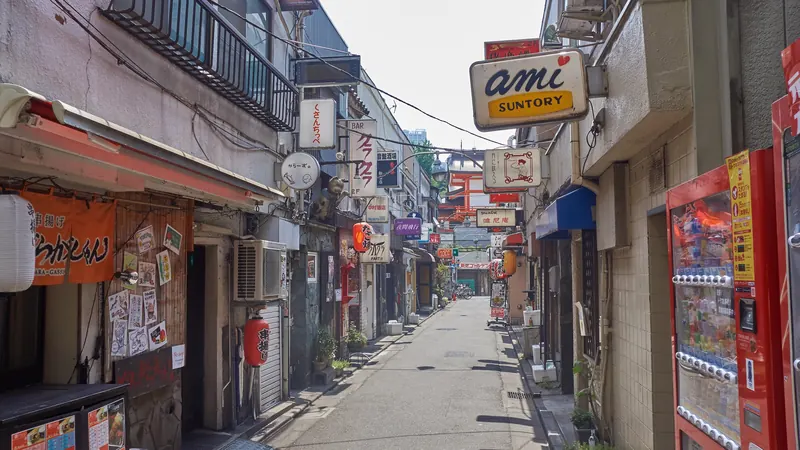
Yes, for learners at a lower intermediate level. A quiet man known only as the Master runs a small restaurant in a back alley of Shinjuku. It opens at midnight and closes around seven in the morning. The menu has one set meal and a few drinks, but he'll make anything a customer asks for if he has the ingredients. Each episode follows one customer and one dish.
That format is ideal for learning. Episodes are short and self-contained, so you can start anywhere. The setting never changes, so the same ordering, eating and drinking language comes back every week. And because the customers range from office workers to performers and gangsters, you hear a wide range of speech styles in one small room.
| Midnight Diner | |
|---|---|
| Japanese title | 深夜食堂 (Shin'ya Shokudō, "late-night diner") |
| Original | Manga by Yarō Abe in Big Comic Original (Shogakukan), since 2006; 31 volumes as of September 2026 |
| Drama | Directed by Jōji Matsuoka, starring Kaoru Kobayashi as the Master. Series 1–3: MBS and TBS, 2009, 2011, 2014. Series 4–5: Netflix's Midnight Diner: Tokyo Stories, 2016 and 2019. Each has 10 episodes. |
| Films | 2015 and 2016 |
| Where to watch | Netflix has carried the series, but which seasons it offers has changed over time and differs by country (check your region) |
| Level (estimate) | JLPT N4 to N3 |
| jpdb.io difficulty | 35/100 average, 48/100 peak (Tokyo Stories, season 1); 2,706 unique words in 10 episodes |
| Speech speed | About 104–134 words per minute per episode |
| Hardest part | Rough speech from some regulars and fast arguments between customers |
On jpdb.io's list of about 1,270 live-action titles, the Netflix season sits around position 500, in the easier half of J-dramas. It's also one of the gentle picks in our list of Japanese dramas for learning Japanese.
What makes Midnight Diner hard
- Rough speech. One regular is a yakuza, and some customers are blunt or drunk. You'll hear 俺, お前 and rough sentence endings that you shouldn't copy at work.
- Many speakers. The counter is full of regulars who comment on every story, so conversations overlap. The main story is usually clear; the side comments are harder.
- Feminine speech from male characters. One regular, a gay bar owner, uses オネエ言葉 (onē kotoba), a stylized feminine way of speaking with endings like 〜わよ. Recognize it, but know it's a TV convention more than everyday speech.
- A few non-Japanese scenes. At least one Tokyo Stories episode features Korean characters and some Korean dialogue. Don't panic when it suddenly isn't Japanese.
Midnight Diner Japanese vocabulary: 30 food and izakaya words
Several of these are episode titles: the first series alone is named after dishes like red sausages and rolled omelet, rice with bonito flakes, ochazuke and potato salad. The rest come up in every episode.
The diner
| Japanese | Romanization | Meaning | Note |
|---|---|---|---|
| 深夜 (しんや) | shin'ya | late at night | Midnight to early morning |
| 食堂 (しょくどう) | shokudō | diner, cafeteria | A simple, everyday restaurant |
| めしや | meshiya | eatery | What the shop's sign says; 飯 is a casual word for a meal |
| マスター | masutā | the owner (of a small bar or café) | How everyone addresses him |
| 営業時間 (えいぎょうじかん) | eigyō jikan | business hours | Mentioned in the opening |
| 常連 (じょうれん) | jōren | a regular (customer) | The people at the counter |
| メニュー | menyū | menu | Short, on a board on the wall |
Ordering and eating
| Japanese | Romanization | Meaning | Note |
|---|---|---|---|
| 注文 (ちゅうもん) | chūmon | order | Customers often just say the dish name |
| 作る (つくる) | tsukuru | to make, cook | The Master's whole policy is about what he can 作る |
| できる | dekiru | can (do), to be ready | "Can you make…?" and "It's ready" |
| 定食 (ていしょく) | teishoku | set meal | Rice, soup, a main and pickles |
| 豚汁 (とんじる) | tonjiru | pork and vegetable miso soup | The only set meal on the menu: 豚汁定食 |
| いただきます | itadakimasu | said before eating | Every episode |
| ごちそうさま | gochisōsama | said after eating | Often as customers pay and leave |
| 美味い (うまい) | umai | tasty | Casual, mostly male; 美味しい is the neutral word |
Drinks
| Japanese | Romanization | Meaning | Note |
|---|---|---|---|
| 一杯 (いっぱい) | ippai | a glass, a drink | "Just one drink"; also means "full" |
| ビール | bīru | beer | On the menu |
| 酒 (さけ) | sake | alcohol; Japanese sake | Often お酒 |
| 焼酎 (しょうちゅう) | shōchū | shochu (distilled spirit) | On the menu |
| 飲む (のむ) | nomu | to drink | Also used for taking medicine |
Dishes from the first series
| Japanese | Romanization | Meaning | Note |
|---|---|---|---|
| 赤いウインナー (あかいウインナー) | akai uinnā | red sausages | Episode 1, often cut into an octopus shape |
| 卵焼き (たまごやき) | tamagoyaki | rolled omelet | Also episode 1 |
| 猫まんま (ねこまんま) | nekomanma | rice topped with bonito flakes | Literally "cat food"; episode 2 |
| お茶漬け (おちゃづけ) | ochazuke | rice with tea or broth poured over | Episode 3 |
| ポテトサラダ | poteto sarada | potato salad | Episode 4 |
| カツ丼 (かつどん) | katsudon | pork cutlet rice bowl | Episode 6 |
| ソース焼そば (ソースやきそば) | sōsu yakisoba | fried noodles with sauce | Episode 8 |
| アジの開き (アジのひらき) | aji no hiraki | butterflied dried horse mackerel | Episode 9 |
| ラーメン | rāmen | ramen | Episode 10 |
| 丼 (どんぶり / どん) | donburi / -don | rice bowl dish | Read -don in compounds like カツ丼 |
Food words are some of the most useful you can learn for a trip to Japan, and they're easy to remember when you've seen the dish cooked on screen. Our upcoming list of Japanese live-action movies for learners includes more food-centered titles.
Speech styles at the counter
- The Master says little, in short, calm, plain Japanese. His opening voice-over, about the city at night and his diner's hours, is slow and clear, and it's nearly the same in every episode. It's the best part of the show to shadow.
- Customers ordering use casual, friendly requests rather than textbook 〜をください. Listen for how regulars ask whether he can make something.
- The regulars include a gay bar owner, a stripper, a yakuza and others. Each has a distinct style, which makes the show a small sampler of Tokyo speech, from very polite to very rough.
- Polite speech appears whenever a new customer arrives. First-time guests are formal, and you can hear them relax into casual speech as the episode goes on.
How to learn Japanese with Midnight Diner: a season plan
With 50 episodes of under half an hour, the five finished series are about 20 hours of viewing. One episode a day is a comfortable rhythm.
| Stage | What to do | Time |
|---|---|---|
| Before you start | Learn the diner, ordering and drinks tables | 30 min |
| Series 1 (10 eps) | Watch each episode with Japanese subtitles if you can get them. Write down the dish and three words from the story. Shadow the opening narration every time | 6–7 h |
| Series 2–3 (20 eps) | Watch first without subtitles, then turn them on for scenes you missed | 10–12 h |
| Tokyo Stories (20 eps) | No subtitles. Rewatch your favorite episode a week later and compare | 9–10 h |
If you can only find the Netflix seasons, start there; episodes don't depend on each other. To get Japanese subtitles on streaming services, see our Netflix immersion playbook. Once Midnight Diner feels easy, try The Solitary Gourmet (孤独のグルメ), another food drama with slow inner monologue.
What to watch after Midnight Diner
- The Solitary Gourmet (孤独のグルメ): one man, one restaurant, one meal per episode, mostly narrated in slow inner monologue.
- Terrace House (テラスハウス): unscripted conversation, much faster and more natural. See our Terrace House guide.
- Document 72 Hours (ドキュメント72時間): real people interviewed at one location for three days, often a diner or a shop. It's in our list of Japanese variety and reality shows.
Track your Midnight Diner hours
Short episodes add up faster than you think. Log each one in LangTrack, and you'll have about 20 hours of drama listening after the five finished series. That's a meaningful chunk of input at the N4 to N3 stage. To see how it fits into the whole, read how long it takes to learn Japanese.
Frequently asked questions
Is Midnight Diner good for learning Japanese?
Yes, for lower intermediate learners. Episodes are short and self-contained, the setting never changes, and each one is built around a dish you can see. jpdb.io rates its Netflix season 35 out of 100.
What JLPT level is Midnight Diner?
About N4 to N3. The Master's narration and the ordering scenes are easy; arguments between customers and rough speech from some regulars are harder.
How many episodes of Midnight Diner are there?
Fifty across five series: three made for MBS and TBS (2009, 2011, 2014) and two Netflix seasons titled Tokyo Stories (2016, 2019), each with 10 episodes.
What is the set meal at Midnight Diner?
The only set meal on the menu is tonjiru teishoku, pork and vegetable miso soup with rice. The Master cooks other dishes on request if he has the ingredients.
Is Midnight Diner the same as the Netflix show?
Netflix's Midnight Diner: Tokyo Stories is the fourth and fifth series of the same Japanese drama, with the same lead actor and director. The first three series aired on Japanese TV.
Track your J-drama hours
Log each Midnight Diner episode and see your Japanese listening hours add up, one dish at a time.
Start tracking — free