Best Sports Anime for Learning Japanese, by Level (2026)
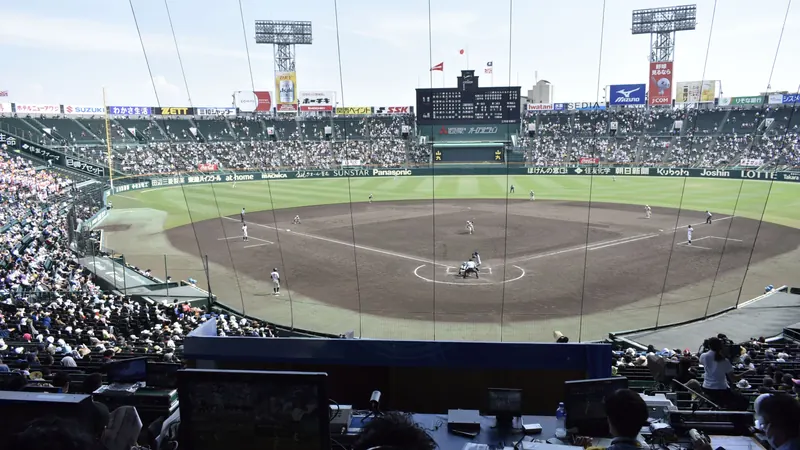
The best sports anime for learning Japanese pair simple, repetitive language with action you can follow even when the dialogue gets away from you. If you miss a line during a match, the scoreboard still tells you what happened. Sports anime also teach a register that textbooks barely cover: the club hierarchy of seniors and juniors, coaches' short orders and the polite-but-casual way younger players talk to older ones.
This list ranks ten sports anime from easiest to hardest, using jpdb.io's anime difficulty list and Natively's learner grades, plus our notes on speed and jargon. Levels are estimates. Haikyu!! is already in our intermediate anime list, so it isn't repeated here, and the film The First Slam Dunk is in our anime movies list.
Quick picks: At N3, start with Free! (jpdb 20/100, Natively L25) or the 2025 hit Medalist. In the N3 to N2 range, Kuroko’s Basketball and Blue Lock. For N2 and above, Run with the Wind and Ping Pong the Animation (Natively L33).
On this page
Best sports anime for learning Japanese at a glance
jpdb scores shows from 0 (very easy) to 100 (very hard) by analyzing their Japanese subtitles, so it measures words and grammar, not speed or shouting. Natively's levels come from learners comparing shows; its key maps L20–26 to about N3 and L27–33 to about N2. Hours are for the first season, at about 24 minutes an episode.
| Anime (sport) | Episodes (first season) | Hours | jpdb | Natively | Our estimate |
|---|---|---|---|---|---|
| Free! (swimming) | 12 | ~5 | 20 | L25 | N3 |
| Medalist (figure skating) | 13 | ~5 | not listed | L25 | N3 |
| Cross Game (baseball) | 50 | ~20 | 32 | L25 | N3 |
| Kuroko’s Basketball | 25 | ~10 | 53 | L24 | N3 to N2 |
| Blue Lock (soccer) | 24 | ~10 | not listed | L27 | N3 to N2 |
| Tsurune (kyūdō archery) | 13 | ~5 | 39 | L27 | N2 |
| Hajime no Ippo (boxing) | 75 | ~30 | not listed | L27 | N2 |
| Yuri!!! on Ice (figure skating) | 12 | ~5 | 45 | L28 | N2 |
| Run with the Wind (running) | 23 | ~9 | 42 | L29 | N2 |
| Ping Pong the Animation | 11 | ~4 | 39 | L33 | N2 to N1 |
Scores were checked in October 2026. The biggest disagreement is Kuroko’s Basketball: jpdb sees a lot of technical basketball and tactics vocabulary, while learners find it easy to follow because the matches carry the story.
Easier sports anime (N3)
Free! Free!
Haruka only feels alive in the water and only swims freestyle. When his childhood rival Rin comes back from abroad, Haruka and his friends restart their high school's swim club so they can race him again.
Why it works for learners: It has the lowest jpdb score here (20/100). Most of the show is friends hanging out, training and talking about feelings in plain casual speech, with only a small set of swimming terms (strokes, relays, times). It's a good first sports anime because the races are short and the story lives in the conversations around them.
Medalist メダリスト
Inori is an eleven-year-old who secretly practices figure skating, against her mother's wishes. Tsukasa, a former ice dancer whose own career stalled, agrees to coach her, and the two set their sights on an Olympic gold medal.
Why it works for learners: A child and her coach means lots of explaining: Tsukasa breaks down each jump and each goal in simple, encouraging language, and Inori asks the questions you would. The manga won both the Shogakukan Manga Award (2023) and the Kodansha Manga Award (2024). Skating jumps use katakana English (アクセル, ルッツ), which you get almost for free.
Cross Game クロスゲーム
Kō grows up next to a batting center run by the Tsukishima family and their four daughters. After a tragedy, he and the second-youngest sister, Aoba, are left trying to carry out a wish: to play at Kōshien, the national high school baseball tournament.
Why it works for learners: Mitsuru Adachi's stories are famous for quiet, understated dialogue, and this one is unhurried even during games. The baseball vocabulary is limited and repeats in every match. It is long at 50 episodes, but it opens with a short childhood prologue and then settles into high school, with one season of games after another.
Team sports and tournaments (N3 to N2)
Kuroko’s Basketball 黒子のバスケ
Kuroko is so unremarkable that opponents forget he's on the court, yet he was once the hidden sixth member of a legendary middle school team. Now at a new high school, he teams up with the powerful, American-raised Kagami to beat his former teammates one by one.
Why it works for learners: The structure is a ladder of rival schools, so every arc repeats the same match vocabulary: scores, fouls, positions and the words for a comeback. Each rival has a speech quirk, such as one ending sentences with 〜っス and another ending his with a stiff 〜なのだよ while trusting his daily horoscope, which trains your ear for character voices. Use Japanese subtitles for the tactics talk.
Blue Lock ブルーロック
After Japan's disappointing World Cup, the football association gathers 300 young strikers in a training facility. Its strange director wants to build the world's most selfish striker, and anyone who loses is out of Japanese football for good.
Why it works for learners: Much of the dialogue is inner monologue in which Isagi analyzes the field, so you get clear, explanatory sentences about space, angles and decisions. The director's speeches about ego are dramatic and abstract, which pushes the level toward N2. The manga won the 2021 Kodansha Manga Award for shōnen. Natively rates season 1 at L27.
One-on-one and individual sports (N2)
Tsurune ツルネ ―風舞高校弓道部―
Minato gave up archery after a painful middle school tournament. In high school he is drawn back to the bow and joins his new high school's kyūdō club, along with his childhood friend.
Why it works for learners: It's the calmest sports anime here; kyūdō is about form and silence, not speed. The trade-off is a traditional vocabulary: 弓 (yumi, bow), 矢 (ya, arrow), 的 (mato, target), 道場 (dōjō) and 射法八節 (shahō hassetsu, the eight stages of a shot). Dojo etiquette brings in more formal speech than most club anime.
Hajime no Ippo はじめの一歩
Ippo is a shy, bullied high school student who helps his mother run the family's fishing-boat business. When a professional boxer rescues him from bullies and takes him to a boxing gym, Ippo finds something he's good at.
Why it works for learners: Ippo is earnest and polite, the gym's old coach is gruff and old-fashioned, and his gym mates are loud and crude, so you hear three very different registers. Each fight comes with commentary and a corner talk between rounds, both of which repeat. It's a long series, so treat it as a background show you return to over months.
Yuri!!! on Ice ユーリ!!! on ICE
Yuri, a Japanese skater whose career is falling apart, goes home to his seaside town in Kyushu. Then his idol, the Russian champion Victor, shows up and announces he'll be Yuri's coach.
Why it works for learners: Compared with Medalist, it's adult and international: Yuri narrates his nerves in long inner monologues, and competition episodes have fast TV commentary. You'll hear some English and Russian mixed in. It's a short season, which makes it a good N2 test that you can actually finish.
Run with the Wind 風が強く吹いている
Kakeru, a gifted runner who quit his high school team, gets caught stealing food. The student who catches him, Haiji, offers him a room in a run-down dorm, then reveals his plan: the ten residents, mostly non-runners, will race the Hakone Ekiden, Japan's biggest university relay.
Why it works for learners: It's based on Shion Miura's 2006 novel, and the dialogue has a novelist's density: ten adults with different backgrounds, jobs and worries. You'll learn university life, part-time work and daily dorm life along with running terms. The Ekiden episodes have race commentary that explains the course and rules, which helps.
Ping Pong the Animation ピンポン THE ANIMATION
Peco and Smile are childhood friends on their high school's table tennis team. Peco is cocky and loves the game; Smile is quiet, talented and won't try to win. A coach who sees Smile's potential starts pushing him.
Why it works for learners: Learners rate it the hardest show here (Natively L33). The dialogue is clipped and mumbled, characters often say less than they mean, and the art style gives you fewer visual clues than a typical anime. It's based on Taiyō Matsumoto's manga and is widely praised by critics, so it's worth saving until you can enjoy it.
Sports anime words every show uses
These words appear in nearly every sports anime, whatever the sport. Several look like English but don't mean what you'd expect.
| Japanese | Romaji (kana) | Meaning | Note |
|---|---|---|---|
| 部活 | bukatsu (ぶかつ) | school club activities | Short for 部活動 |
| 先輩・後輩 | senpai, kōhai (せんぱい・こうはい) | senior, junior | The backbone of every club |
| 監督 | kantoku (かんとく) | team manager, head coach | Also "film director" |
| 試合 | shiai (しあい) | match, game | |
| 大会 | taikai (たいかい) | tournament, competition | 全国大会: nationals |
| 予選 | yosen (よせん) | qualifying round | Before 決勝 (kesshō), the final |
| 優勝 | yūshō (ゆうしょう) | winning the championship | Not just one win: the whole title |
| 合宿 | gasshuku (がっしゅく) | training camp | Usually a summer episode |
| 勝負 | shōbu (しょうぶ) | contest, showdown | 勝負だ!: "let's settle this" |
| 悔しい | kuyashii (くやしい) | frustrated, galling | The feeling after a loss; no neat English word |
| 才能 | sainō (さいのう) | talent | Often set against 努力 (doryoku), effort |
| ドンマイ | donmai | never mind, shake it off | From English "don't mind" |
| ファイト | faito | "Come on!", "You can do it!" | A cheer, not a fight |
| 甲子園 | Kōshien (こうしえん) | national high school baseball tournament | Named after its stadium |
| 駅伝 | ekiden (えきでん) | long-distance relay race | Hakone's is televised every January |
Is sports anime good for learning Japanese?
Yes. Sports anime is one of the best genres for intermediate learners, because the action carries the story when you miss a line, and because club life teaches real social Japanese: how juniors address seniors, how coaches give instructions, and the casual-polite 〜っす that younger players use with older ones. The weak spots are shouting during matches and sport-specific jargon. Learn a dozen terms for your chosen sport first, and use Japanese subtitles for the matches; our guide to getting Japanese subtitles covers how.
One learner mistake to avoid: club speech is not workplace speech. 〜っす is fine with a friendly senior but sounds sloppy with a boss or client. For adult registers, pair a sports show with a Japanese drama.
Track your sports anime hours
The first seasons above come to just over 100 hours of listening, most of it in Cross Game and Hajime no Ippo. Log every episode in LangTrack to see your weekly listening time, and check our anime hours guide for what that input adds up to.
Frequently asked questions
What is the easiest sports anime for learning Japanese?
Free! is one of the easiest. jpdb rates it 20 out of 100 and Natively learners place it at level 25, around JLPT N3. Medalist and Cross Game are also good N3 choices.
Is Blue Lock good for learning Japanese?
Yes, at about N3 to N2. Natively rates season 1 at level 27. Isagi's inner monologue explains each play clearly, but the director's speeches about ego are abstract and harder to follow.
Is Haikyu good for learning Japanese?
Yes. Haikyu!! is a popular N3 choice for its senpai and kōhai speech and repetitive volleyball vocabulary. It is covered in our intermediate anime list, so this list focuses on other sports.
What does ドンマイ mean in sports anime?
ドンマイ (donmai) comes from the English "don't mind" and means "never mind" or "shake it off." Teammates say it after a mistake.
Why do sports anime characters say っす?
〜っす is a casual shortening of です. Younger club members use it with seniors to sound polite but friendly. It is common in sports clubs but too casual for most workplaces.
Track your anime hours
Log every match you watch and see a sports marathon turn into real listening hours.
Start tracking — free