Best Historical K-Dramas (Sageuk) for Korean Learners
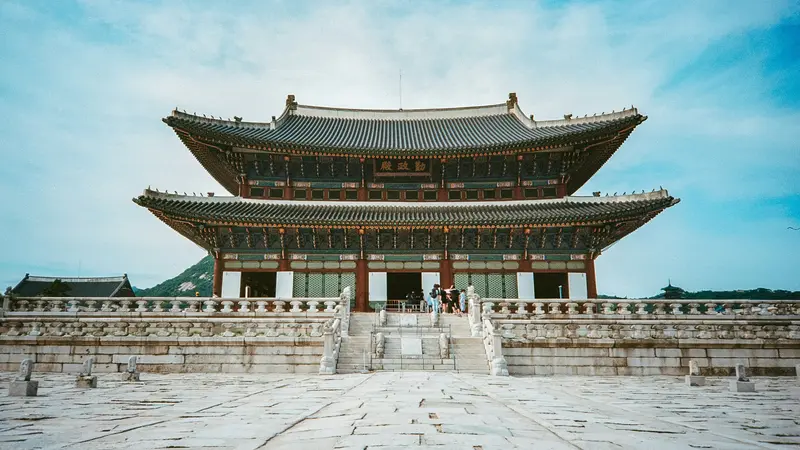
Sageuk, Korean historical dramas, have some of the best stories in Korean television: palace intrigue, forbidden romances, court politics, and the occasional zombie plague. They are also a trap for learners. Characters speak in old-fashioned endings nobody uses today, address each other with titles you won't find in a textbook, and discuss politics in a heavily Sino-Korean vocabulary. Copy a sageuk king at a Seoul café and you'll get very strange looks.
That doesn't mean you should avoid them. It means you should know what you're getting, pick the right ones for your level, and watch them alongside modern dramas rather than instead of them. This guide explains how sageuk speech works, when to start watching, and ranks ten historical dramas from the most approachable to the most demanding.
Quick picks: The easiest way in is Mr. Queen, where a modern man's mind in a Joseon queen's body mixes today's slang with palace speech. Next, try Rookie Historian Goo Hae-ryung or Love in the Moonlight. When you're advanced, take on Six Flying Dragons.
On this page
How sageuk Korean is different
Most sageuk are set in the Joseon dynasty (1392–1897), and their dialogue is a stylized version of older Korean rather than a perfect historical record. The main differences you'll notice:
- Old speech endings. You'll hear -하오 and -하시오 (a semi-formal style that has almost vanished), -느냐 and -더냐 in questions, and very humble forms like -사옵니다 from servants.
- Titles instead of names. 전하 (Your Majesty, for the king), 저하 (Your Highness, for the crown prince), 마마 (for queens and royals), 중전 (the queen), 대감 (a high official), 상궁 and 나인 (court ladies), 내관 (a eunuch).
- Special pronouns. The king calls himself 과인, servants call themselves 소인 or 쇤네, and people of lower rank rarely say "you" at all.
- Political and ceremonial vocabulary. Court debates are full of Sino-Korean words for rebellion, succession, exile and tribute.
The good news: the grammar underneath is still Korean. Particles, verb stems and most vocabulary are the same, and once you know a dozen endings and titles, the rest becomes far less mysterious. Sageuk also make the hierarchy behind modern honorifics very visible, which helps you understand why modern Korean works the way it does.
When should you start watching sageuk?
A rough guide:
- Beginner (TOPIK 1–2): watch for fun with English subtitles, but don't try to learn the dialogue. Focus on modern dramas for study.
- Intermediate (TOPIK 3–4): the "fusion" sageuk, light romantic or comedic historical dramas, are fine. They use simpler, partly modern dialogue.
- Advanced (TOPIK 5–6): traditional, politically dense sageuk become rewarding, and good practice for Sino-Korean vocabulary.
A simple rule: learn sageuk words to understand them, not to use them. If you start saying 그렇소 to your Korean friends, they'll laugh with you once and then gently correct you.
Easiest: fusion sageuk with modern flavor
Mr. Queen 철인왕후
Jang Bong-hwan is a brash, modern-day chef at the presidential residence. After an accident, he wakes up in the body of a young queen in the Joseon court, married to a king who seems weak and surrounded by people waiting for her to slip up.
Why it works for learners: This is the gentlest bridge into sageuk. The queen's inner voice is a modern man thinking in today's casual Korean and slang, while everyone around her speaks palace Korean. The contrast is the joke, and it teaches you exactly which expressions are old and which are new. It's based on the Chinese web series Go Princess Go, and the humor is broad.
Rookie Historian Goo Hae-ryung 신입사관 구해령
In early 19th-century Joseon, the free-spirited Goo Hae-ryung becomes one of the first female historians allowed to record court events. Prince Dowon, sheltered and awkward, secretly writes popular romance novels under a pen name. Their paths cross in the palace.
Why it works for learners: The tone is light and the dialogue relatively plain for a sageuk. Hae-ryung's job is writing down what is said, which introduces vocabulary around records, books and reading. Her clashes with tradition highlight the gap between what women were expected to say and what she actually says.
Love in the Moonlight 구르미 그린 달빛
Hong Ra-on has spent her life disguised as a man. Through a series of mishaps, she ends up in the palace as a eunuch and is assigned to serve Lee Yeong, a sharp-tongued crown prince who doesn't know who she really is.
Why it works for learners: It's a youth romance first and a political drama second, so much of the dialogue is light banter. You'll hear the full range of palace titles and very clear lessons in hierarchy: the crown prince's casual speech downward, the eunuchs' humble speech upward. The native title is a lovely phrase to know: roughly "moonlight drawn by clouds."
Palace dramas with more court politics
Under the Queen's Umbrella 슈룹
Queen Hwa-ryeong is the mother of several mischievous princes who are a constant embarrassment to the royal family. When competition over the royal succession heats up, she fights to protect and educate her sons against rival consorts.
Why it works for learners: It's a family drama in palace clothes, so many scenes are a mother talking to her children, which keeps the language manageable. The rivalry among consorts adds formal court speech. The title is a nice curiosity: 슈룹 is a Middle Korean word for "umbrella."
The Red Sleeve 옷소매 붉은 끝동
Seong Deok-im is a court lady who values her independence. Yi San is the crown prince who will become King Jeongjo. The drama is a fictionalized account of their relationship and the strict world of palace servants.
Why it works for learners: It's the best show here for the life of court ladies (궁녀), with their ranks, duties and humble speech. Deok-im speaks very politely upward but with her friends among the court ladies it's warm and casual, a good contrast. Based on real historical figures, it's a gentle introduction to the reign of King Jeongjo.
Moon Embracing the Sun 해를 품은 달
Set under a fictional Joseon king, the drama begins with a palace conspiracy and a shaman's prophecy, then follows a young crown prince and the scholar's daughter he falls for as a teenager. Court factions have other plans for both of them.
Why it works for learners: The early episodes, with child actors, are slower and easier than the adult storyline, so it's a good drama to grow into. Shamanism and astrology bring in a whole set of traditional vocabulary. It was a ratings phenomenon in Korea, so Korean fan writing about it is plentiful.
Genre sageuk
Kingdom 킹덤
Rumors say the king is gravely ill, and the crown prince Lee Chang is barred from seeing him. Accused of treason, he sets off to investigate, and finds a mysterious plague spreading through the south of the kingdom.
Why it works for learners: Short seasons with episodes under an hour make it the easiest sageuk to finish. The political scenes use dense court vocabulary, but action scenes carry the story, so you can follow along even when the dialogue gets hard. Expect gore; this is a zombie show.
Mr. Sunshine 미스터 션샤인
Eugene Choi was born into slavery in Joseon and escaped to the United States as a boy. He returns decades later as a US Marine officer posted to the American legation in Seoul, at a time when Korea's independence is under threat, and meets Go Ae-shin, a noblewoman with a secret.
Why it works for learners: Set in the late 1800s and early 1900s, it bridges old and modern Korean: aristocrats still speak in old forms while the city fills with foreigners, newspapers and new words. There's also a fair amount of English and some Japanese. The dialogue is poetic and often understated, so it rewards advanced learners who can catch nuance.
Classic, long-form sageuk
Jewel in the Palace 대장금
Seo Jang-geum, an orphaned girl, enters the royal kitchen as a young trainee and works her way up through talent and persistence. Inspired by a woman recorded in the royal annals as a physician, the drama follows her through the palace kitchen and beyond. It is also known by its Korean title, Dae Jang Geum.
Why it works for learners: Food, ingredients and cooking methods make up a big part of the vocabulary, later joined by traditional medicine. The pace is steady and many scenes repeat similar situations, which helps. At 54 episodes, it's a long commitment, best for learners who want a big project.
Six Flying Dragons 육룡이 나르샤
At the end of the Goryeo dynasty, six people, including the future King Taejong (Yi Bang-won) and the scholar Jeong Do-jeon, become caught up in the political upheaval that founds the Joseon dynasty.
Why it works for learners: This is the deep end: long debates about government, philosophy and reform, delivered in formal, Sino-Korean-heavy speech. If you're preparing for advanced Korean history content or simply want the hardest listening practice on this list, this is it. The title comes from Yongbieocheonga, one of the first works written in Hangul.
How to watch sageuk as a learner
- Make a title sheet. Write down the dozen titles and pronouns above, plus any new ones, with who uses them. After two episodes, you'll recognize them all.
- Separate old from modern. When you mine sentences for flashcards, mark sageuk-only endings clearly so you don't start using them in conversation.
- Use Korean subtitles generously. Old endings are much easier to read than to hear, especially when actors draw them out.
- Read a little history. A Korean-language summary of the period (a children's history book is ideal) makes palace politics far easier to follow.
- Alternate with modern dramas. One sageuk episode, one modern episode keeps your everyday Korean sharp.
Track your viewing
Long sageuk like Jewel in the Palace can take months to finish, and it's easy to lose track of how much you've watched. Logging episodes in LangTrack as immersion time shows your progress through a long series and your total Korean hours. You might label sageuk sessions separately so you can see how much historical versus modern Korean you're getting. For more on input tracking, see our comprehensible input tracking guide.
Where to go next
If palace Korean feels like too much right now, our K-dramas for intermediate learners includes Goblin, whose flashbacks are a gentle preview of historical speech. For the hardest modern Korean, see our advanced K-drama list, and for how many hours all this adds up to, read how many hours it takes to learn Korean.
Frequently asked questions
Are historical K-dramas good for learning Korean?
They are good for listening practice, vocabulary and understanding Korean hierarchy, but much of the speech is old-fashioned. Watch them alongside modern dramas and avoid copying sageuk endings in real conversation.
What is the easiest sageuk for Korean learners?
Mr. Queen is one of the easiest because the main character thinks in modern casual Korean while everyone around her speaks palace Korean. Rookie Historian Goo Hae-ryung and Love in the Moonlight are also light and approachable.
What does 전하 mean in K-dramas?
전하 means "Your Majesty" and is used to address the king. The crown prince is addressed as 저하, and queens and other royals are often called 마마.
Why do people in sageuk say -소 and -오?
Endings like -하오 and -하시오 belong to an old semi-formal speech level that has almost disappeared from modern Korean. Sageuk use them to sound historical, but today they sound theatrical or joking.
Track your sageuk marathon
Log every episode of that 50-episode epic and see your Korean listening hours add up.
Start tracking — free